| Subject: SMH: Spying fears haunted Timorese
during oil talks
Also ABC PM - Author says Australia extorted East
Timor over oil, gas
Spying fears haunted Timorese during oil talks
Tom Allard
June 1, 2007
EAST TIMOR's former prime minister, Mari Alkatiri, and his officials
were convinced the Australian Government was spying on them during the
often heated negotiations for a treaty over oil and gas in the Timor Sea.
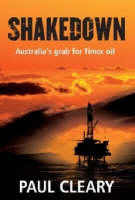
A book on the $41 billion energy deal - Shakedown: Australia's Grab for
Timor Oil - also says Australian foreign affairs officials intimated to
their Timorese counterparts that they were eavesdropping on them.
Its author, Paul Cleary, a former Herald journalist, was part of the
Timorese team led by Peter Galbraith, a former US diplomat.
During talks in Canberra in September 2004 Mr Galbraith told colleagues
to stop holding meetings in their hotel, fearing their rooms were bugged.
The officials threw their mobile phones in a bag, which was dumped while
they held their talks in the National Gallery's sculpture garden 100
metres away.
The phones were considered potential receptors for eavesdropping
devices but the meeting was adjourned when a security guard became
suspicious about the bag.
Other counterespionage efforts included the use of secret passwords for
emails.
Mr Alkatiri, East Timor's prime minister through the negotiations, was
also convinced his office was bugged. He would turn up the volume on his
television during sensitive talks with his advisers.
Cleary also writes that a foreign affairs official, Doug Chester, joked
that the Timorese negotiators had made a wrong bet on the Labor leader,
Mark Latham, winning the 2004 election.
He suggested the Australians had been monitoring a Timorese official
who had visited a website to bet on the poll.
But Foreign Affairs sources said the remark could more likely be
explained by East Timor's well-known wish that a more sympathetic Mr
Latham would win.
---
ABC PM - Author says Aust extorted East Timor over oil, gas
PM - Friday, 1 June , 2007 18:46:00
Reporter: Mark Colvin
MARK COLVIN: "Shakedown" is a slang term for an act of
extortion, and a shakedown is what the writer Paul Cleary calls the way
Australia acted towards East Timor over the oil and gas in the sea between
our two countries.
Mr Cleary is a former journalist who was appointed by the World Bank as
an adviser to East Timor's Prime Minister in the oil and gas negotiations.
His new book on the story is called Shakedown, and I asked him first,
if East Timor's case for the resources was so cut and dried, why had the
Indonesians, who were in charge before Timorese independence, agreed so
easily to Australia's demands.
PAUL CLEARY: Indonesia signed that agreement when international law in
this area was in its infancy and subsequent to that the Foreign Minister
said Australia had taken Indonesia to the cleaners.
MARK COLVIN: So you're saying that Australia kind of behaved as some
kind of regional bully?
PAUL CLEARY: I think there was a lot of bully that went on. Mr Downer
pounding the table saying "we're a rich country, we can sit this out
for 30, 40, 50 years". And also really threatening East Timor to
sever its economic lifeline to stop development in the Timor Sea unless
East Timor signed over its rights to 80 per cent of the biggest field in
the area.
Meanwhile Australia was already exploiting the resources, which was
actually contrary to international law. I think people in East Timor
would've wanted it to take longer but however I think the Government
particularly in the interim period from 2000 when the UN was in control in
the transitional government, there was a need to get the revenue, so
that's why the Timor Sea Treaty was negotiated in 2000 and signed in 2002.
MARK COLVIN: And then we got to this point in 2004 when the East
Timorese patience just ran out and one of the signals was actually on this
program when Jose Ramos-Horta came on spoke to me about what the DFAT
(Department of Foreign Affairs and Trade) negotiator Doug Chester had just
done.
(excerpt from PM interview)
JOSE RAMOS HORTA: The Australian side basically imposed on us an
ultimatum. Mr Doug Chester, the Senior Official from Foreign Affairs, DFAT,
that led the Australian delegation simply said "take it or leave
it".
MARK COLVIN: So what did you say to this "take it or leave
it"? offer?
JOSE RAMOS HORTA: Of course we can't accept ultimatums, we cannot
accept blackmail, we are poor but we have a sense of honour, a sense of
dignity of our rights.
MARK COLVIN: Jose Ramos Horta is a man, usually very moderate words.
What was the significance of what he said?
PAUL CLEARY: He is, I mean, in this book I call Mr Ramos Horta the
consummate diplomat, he always is very measured and this is a rare example
of him really loosing his cool, loosing his patience. Because this is a
classic example of the bullying tactics that were being used, Mr Doug
Chester telling the Timorese, "You hand over your rights to this
field by 5 pm on October 28th and we'll give you $3-billion and that's
it," and Timor by digging in standing up for its rights, managed to
get 3 times that amount of current oil prices.
MARK COLVIN: So it was worth hanging on?
PAUL CLEARY: Oh definitely. I think the Timorese are, realized once
they got the revenue under the Timor Sea Treaty, and once Australia
ratified that treaty the revenue began to flow. They had a bit more
comfort they could afford to stand their ground and to really get the deal
they thought was fair.
And in the end I think what the Timorese got was probably the 50 per
cent share of Greater Sunrise, probably the minimum acceptable to the
Timorese and the maximum that Australia was willing to give up.
MARK COLVIN: So it ended without irreparable damage to the relationship
between the two sides. What about the situation in East Timor, the
spending of the money?
PAUL CLEARY: Timor does have a very good system to save the money. This
was modeled on Norway, which really does have a very excellent system,
very transparent, very robust, really cannot be tampered with.
MARK COLVIN: They used their oil to really create a massive future fund…
PAUL CLEARY: Exactly, it was a massive future fund. Something that
Australia could actually think about well with all the revenue we're
getting from the commodity boom.
Essentially Timor is only spending about half the money and the idea is
at the end of it, when the oil runs out, they'll have this massive fund
and they can live of the interest forever.
MARK COLVIN: This is to overcome what some people call the curse of
oil?
PAUL CLEARY: The resource curse, that's right, or the paradox of
plenty. All these problems that these countries get a huge influx of
revenue, it inflates their exchange rate, political leaders go and spend
money on weapons and big grandiose palaces and things. So the idea is to
have the fiscal discipline.
The problem with Timor had been though is that they haven't done a very
good job spending the money. And this has been the real weakness in the
current government.
MARK COLVIN: Because what we see, what we tend to see on our television
screens from Timor recently has been riots and poverty.
PAUL CLEARY: Well exactly, you got massive youth unemployment. I mean
the East Timor economy went backwards for four years straight in per
capita terms.
I mean no developing country coming out of a post conflict situation
can really stay together under that situation. And that was really I think
the background to this crisis that a lot of people will have overlooked.
That it was the Government's failure with the UN withdrawing rapidly
and I think that was a problem Australia urged that of the United Nations
to pull out the peacekeepers.
The economy imploded, and the Government was very fiscally
conservative, I think they had some quite patronising ideas about the
Timorese, that you can't trust them with money, and they'll have this
dependency mentality but there just wasn't enough money circulating around
the economy.
MARK COLVIN: Paul Cleary whose book Shakedown was released today.
Back to May menu
April
World Leaders Contact List
Main Postings Menu
|