|
|
||||||||||||||||||||||||||||||||||||||||||||||||||||||||||||||||||||||||||||||||||||
|
Books &
Gift Books
Periodicals, Magazines and Pamphlets
|
||||||||||||||||||||||||||||||||||||||||||||||||||||||||||||||||||||||||||||||||||||

 |
 |
 |
 |
 |
 |
 |




|
Watch the documentaries |
|||
 |
|
||
| Blu-Ray | DVD | Blu-Ray | DVD |

Books on Indonesia, West
Papua, and Aceh
-
Books and pamphlets
listed alphabetically
by author
B119 Activist Archives: Youth Culture and the Political Past in Indonesia
by Doreen Lee
 In Activist Archives Doreen Lee tells the origins, experiences, and
legacy of the radical Indonesian student movement that helped end the
thirty-two-year dictatorship in May 1998. Lee situates the revolt as the most
recent manifestation of student activists claiming a political and historical
inheritance passed down by earlier generations of politicized youth. Combining
historical and ethnographic analysis of "Generation 98," Lee offers rich
depictions of the generational structures, nationalist sentiments, and
organizational and private spaces that bound these activists together. She
examines the ways the movement shaped new and youthful ways of looking, seeing,
and being—found in archival documents from the 1980s and 1990s; the connections
between politics and place; narratives of state violence; activists'
experimental lifestyles; and the uneven development of democratic politics on
and off the street. Lee illuminates how the interaction between official
history, collective memory, and performance came to define youth citizenship and
resistance in Indonesia’s transition to the post-Suharto present.
In Activist Archives Doreen Lee tells the origins, experiences, and
legacy of the radical Indonesian student movement that helped end the
thirty-two-year dictatorship in May 1998. Lee situates the revolt as the most
recent manifestation of student activists claiming a political and historical
inheritance passed down by earlier generations of politicized youth. Combining
historical and ethnographic analysis of "Generation 98," Lee offers rich
depictions of the generational structures, nationalist sentiments, and
organizational and private spaces that bound these activists together. She
examines the ways the movement shaped new and youthful ways of looking, seeing,
and being—found in archival documents from the 1980s and 1990s; the connections
between politics and place; narratives of state violence; activists'
experimental lifestyles; and the uneven development of democratic politics on
and off the street. Lee illuminates how the interaction between official
history, collective memory, and performance came to define youth citizenship and
resistance in Indonesia’s transition to the post-Suharto present. Elegantly written, rich with ethnographic and archival material, and bursting with theoretical insights, Activist Archives offers novel analysis of one of the most important subjects of contemporary Indonesia. In Doreen Lee's sensitive ethnography the student activist emerges expressing a mix of fiery passion, intellectual idealism, irreverent playfulness, hipster self-consciousness, nostalgia, rivalry, and disillusionment. --; Karen Strassler, author of, Refracted Visions: Popular Photography and National Modernity in Java
Duke University Press, 2016, 296 pp. $25
 B86
Unfinished Nation: Indonesia Before and After Suharto
B86
Unfinished Nation: Indonesia Before and After Suharto
by Max Lane
Unfinished Nation traces the evolution of Indonesia from its
anti-colonial stirrings in the early twentieth century to the lengthy,
and eventually victorious, struggle against the dictatorship of President
Suharto. Lane describes how small resistance groups inside the country
directed massive political transformation. It shows how the real heroes
were the Indonesian workers and peasants, whose sustained mass direct
action was the determining force in toppling one of the most enduring
dictatorships of modern times. Taking in the role of political Islam,
and with considerations on the future of this fragmented archipelagic
nation, Unfinished Nation is an illuminating account of modern Indonesian
history.
Max Lane is Visiting Fellow, Department of Malay Studies, National
University of Singapore. In addition to numerous academic publications,
he has actively supported political change in Indonesia since the mid-1970s,
and has translated work by the acclaimed Indonesian novelist Pramoedya
Ananta Toer, including the famed Buru Quartet.
Reviews in
South China
Morning Post,
Direct Action
Verso. 2008. 312 pp. $30
Order
from Amazon,
Support ETAN

 B98
Freedom in Entangled World: West Papua and the Architecture
of Global Power
B98
Freedom in Entangled World: West Papua and the Architecture
of Global Power
by Eben Kirksey
Eben Kirksey first went to West Papua in 1998 as an exchange student. His later study of West Papua's resistance to the Indonesian occupiers and the forces of globalization morphed as he discovered that collaboration, rather than resistance, was the primary strategy of this dynamic social movement. Accompanying indigenous activists to Washington, London, and the offices of the oil giant BP, Kirksey saw the revolutionaries' knack for getting inside institutions of power and building coalitions with unlikely allies, including many Indonesians. He discovered that the West Papuans' pragmatic activism was based on visions of dramatic transformations on coming horizons, of a future in which they would give away their natural resources in grand humanitarian gestures, rather than passively watch their homeland be drained of timber, gold, copper, and natural gas. During a lengthy, brutal occupation, West Papuans have harbored a messianic spirit and channeled it in surprising directions. Kirksey studied West Papua's movement for freedom as a broad-based popular uprising gained traction from 1998. Blending extensive ethnographic research with indigenous parables, historical accounts, and compelling narratives of his own experiences, he argues that seeking freedom in entangled worlds requires negotiating complex interdependencies.
“Here at last is the account I can unreservedly recommend to anyone interested in the courageous people and fragile geography of West Papua. Eben Kirksey makes accessible the unique imagery of West Papuans long subject to racism, corporate exploitation, and a brutal military. Marshaling impeccable scholarship, he transcends conventional political ideology to define a form of conflict resolution relevant to many ‘entangled worlds.’ Bravo!”-- Max White, Amnesty International USA
"[A] page-turning blend of cultural analysis, human rights reportage, and ethnography..." -- Danilyn Rutherford, author of Laughing at Leviathan: Sovereignty and Audience in West Papua
A new book about the indigenous people of Indonesia's Papua region says Papuans have seemingly never-ending reserves of hope for self-determination. Freedom in Entangled Worlds is the culmination of almost 15 years of research about the West Papuan freedom struggle by American cultural anthropologist Eben Kirksey. His book documents the way West Papuans have collaborated with outside forces to further their cause rather than continue resistance against the Indonesian military forces in the region. --"New Technology Means West Papuans' Plight Won't Fade Away, Says Author" Radio New Zealand International, May 16, 2012
“[A]n interesting hybrid of an anthropological study crossed with an accessible history of the separatist movement in West Papua, Indonesia. . . . The book provides an engrossing history of the past two decades of this region, as well as a pointed narrative that implicates the Indonesian government and the multinational corporations seeking West Papua's natural resources in grave human rights abuses and promotion of state terror. . . .” -- S. Maxim, Choice
Duke University Press, 2012, 305 pp. $25 paperback
Review by Ed McWilliams for ETAN
|
Browse and buy books on Indonesia and other topics from
Powells Books |


| Follow ETAN | ||||||||
 |
 |
 |
|
|
 |
 |
|
 |
 B53 Indonesia’s Secret War in Aceh
An eye-opening, firsthand account of Indonesia’s campaign of terror
in Aceh.
Acclaimed journalist John Martinkus, whose first book,
A Dirty Little War told the definitive story of East
Timor’s passage to independence, provides a vivid, eyewitness account
of the brutal war in Aceh. Like East Timor, Aceh wants independence
but it is paying a terrible price, and since September 11 things have
got much worse. This book gets inside a conflict. Includes a final chapter
on institutionalized impunity, the legacy of East Timor and the reality
of West Papua.
"Martinkus should be saluted for braving brutal consequences to tell
us the price of Western, and Australian, tacit acceptance of a rapacious
regional power. We can't say we weren't told." -- Antony Loewenstein,
Sydney Morning Herald
The book "traces the immediate events that led to this military siege
and the Acehnese people’s resistance to it. Martinkus has an easy-to-read
style, relaying his personal experiences of travelling throughout Aceh
to present an intimate portrayal of the daily plight faced by the Acehnese
people." --Jon Lamb,
GreenLeft
Weekly
From East Timor to
Iraq: An Interview with John Martinkus (January 28, 2005)
Random House (Australia), 352 pp., Paperback $35
Eye on Aceh Pamphlets
click here
B67 Verandah
of Violence: The Background to the Aceh Problem
Edited by Anthony Reid
This book offers a guide to the complexities of modern Aceh, a land
dubbed "The Verandah of Mecca" as it moves toward peace and reconstruction.
Verandah of Violence probes the underlying causes of the conflict that
has pitted Aceh against Jakarta, explaining why the Acehnese entered
the Indonesian republic in 1945 with an unparalleled determination to
resist outside domination, and how these attitudes have shaped Aceh's
relations with the Indonesian state.
 In Indonesia's westernmost province of Aceh, the democratization process
that began in Indonesia in 1998 encouraged the overt expression of regionalist
sentiment and resentment of the military. The surprising extent of both
feelings made Aceh, home to a long-standing independence movement, the
next potential candidate after East Timor to break away from Indonesia,
and led to harsh repressive measures by the military. The tsunami of
December 2004 brought incalculable destruction and loss to Aceh. At
the same time, it brought international sympathy and aid on an unprecedented
scale, along with new pressures for peace. In August 2005, Indonesia
and Aceh signed a peace agreement designed to put an end to the conflict.
Authors include Isa Sulaiman, Edward Aspinall, William Nessen, Damien
Kingsbury and Lesley McCulloch, Kirsten E. Schulze, Aleksius Jemadu.
In Indonesia's westernmost province of Aceh, the democratization process
that began in Indonesia in 1998 encouraged the overt expression of regionalist
sentiment and resentment of the military. The surprising extent of both
feelings made Aceh, home to a long-standing independence movement, the
next potential candidate after East Timor to break away from Indonesia,
and led to harsh repressive measures by the military. The tsunami of
December 2004 brought incalculable destruction and loss to Aceh. At
the same time, it brought international sympathy and aid on an unprecedented
scale, along with new pressures for peace. In August 2005, Indonesia
and Aceh signed a peace agreement designed to put an end to the conflict.
Authors include Isa Sulaiman, Edward Aspinall, William Nessen, Damien
Kingsbury and Lesley McCulloch, Kirsten E. Schulze, Aleksius Jemadu.
NUS Press, 2006 423 pp. Paper $30
 B75 The Testimony Project:
Papua
B75 The Testimony Project:
Papua
by Charles E. Farhadian, photographs by Stephan Babuljak
A collection of histories in West Papua. Twelve West Papuans speak for
themselves, movingly present their life stories in 'raw narratives'
as if the interviewees were speaking directly to the reader. Introduction
by Ed McWilliams. Dr. Charles Farhadian, who edited the book, explains:
"The goal in creating the book is two-fold. First, it is crucial that
Papuans get a chance to speak for themselves, rather than being reinterpreted
or silenced for any number of reasons and by any number of people. By
speaking for themselves, Papuans demonstrate they are actors in their
own right. Second, it is equally important to provide an historical
document that records the lives of Papuans at the beginning of the 21st
century."
“This book is the first of its kind. It dignifies Papuans and lets us
speak on our own terms.”
-- Father Neles Tebay, Bishop of Jayapura, Papua
"The Testimony Project: Papua challenges the standardized or
idealized views of Papuans.”
-- Rev. Dr. Benny Giay, Professor of Church & Society, Papua
Penerbit Deiya. 2007. 125 pp.$20
 B54 West Papua and Indonesia
since Suharto: Independence, Autonomy or Chaos?
B54 West Papua and Indonesia
since Suharto: Independence, Autonomy or Chaos?
by Peter King
I
Traveling extensively in West Papua and throughout Indonesia, Peter King has interviewed leading figures from the West Papuan Independence movement, church groups, and human rights NGOs. West Papua and Indonesia since Suharto places the current Papuan struggles in a context of failing Indonesian reform.
Peter King is a research associate in government and international relations at the University of Sydney.
University of NSW Press, 2004, 240 pp. $24.95
"King argues passionately and persuasively that international intervention to resolve Papua’s plight is essential: Australia, the US and other countries must act in concert through the UN once more, as they did in East Timor. Indonesians must be persuaded that their best interests lie not in a ‘security approach’ but in dialogue and negotiation with the Papuans and other disenchanted minorities."
Read review: West Papua’s long struggle for justice
B93
Interfaith Endeavours for Peace in West Papua
by Fr. Neles Tebay
Pontifical Mission Society, Aachen, Germany, 2006 76 pp. $5
Packed with facts like this about the plight of the Papuan people,
this short book is an indispensable read for activists and anyone wanting
to know why Papuans are so unhappy about their present plight as Indonesian
citizens. -
TAPOL
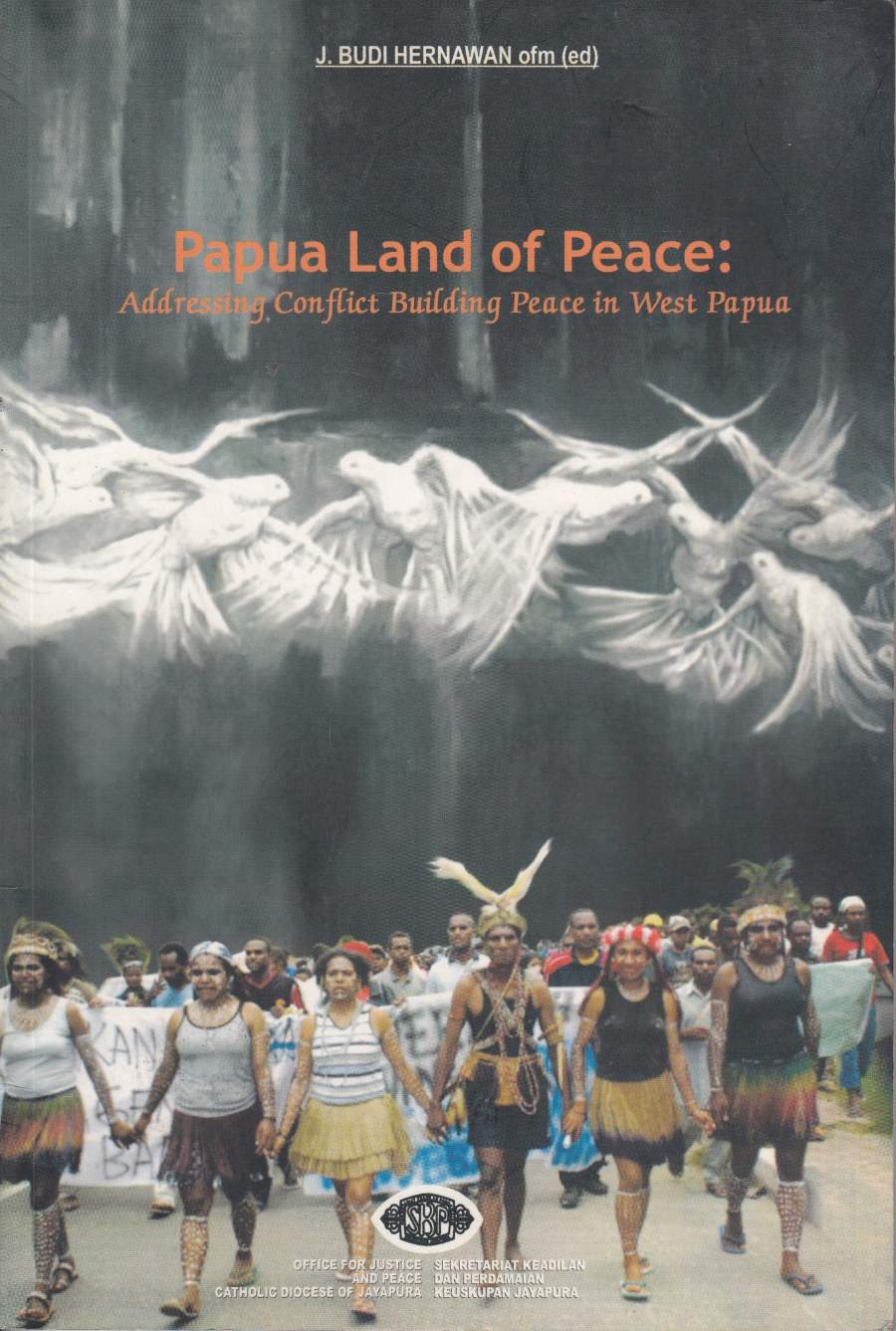
B111 Papua Land of Peace: Addressing
Conflict Building Peace in West Papua This book documents efforts to build Papua
as a Land of Peace after decades of conflict and social tension
within the region. Articles describe how difficult achieving
peace can be, while documenting why it must be done. The book
has a special focus on the efforts of religious leaders and
institutions. Office for Justice and Peace, Catholic
Diocese of Jayapura, 2005, 107 pp. Paperback.
$15 |
 B114 Brown Journal of World Affairs:
Keeping Sukarno’s Promise? Megawati’s Indonesia
B114 Brown Journal of World Affairs:
Keeping Sukarno’s Promise? Megawati’s Indonesia
This issue contains a collection of essays, speeches and articles by a range of academics analyzing the social, political and economic state of the then-newly-democratic Indonesia. Articles address the challenges Indonesia faced as it comes out Suharto’s shadow. The journal also features an interview with Paul Wolfowitz, former U.S. ambassador to Indonesia and former Deputy Secretary of Defense and a section on the international trade in small arms.
The Brown Journal of World Affairs, 2002, 362 pp.
$25 paperback.
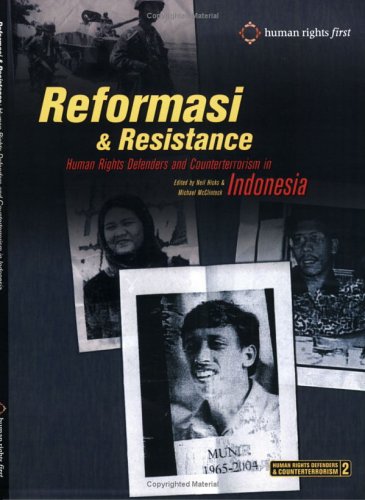 B116
Reformasi and Resistance: Human Rights Defenders and Counterterrorism in
Indonesia
B116
Reformasi and Resistance: Human Rights Defenders and Counterterrorism in
Indonesia
President Suharto's fall from power in 1998 ushered in a period of political reform (reformasi). But democratization has been met with resistance, and after September 11, 2001, rising military influence in Indonesia was reinforced by an international environment that emphasizes security concerns at the expense of rights and freedoms. These convergent forces contributed to renewed conflict in the province of Aceh, antiterrorism legislation that reversed hard-won safeguards, and continued attacks on human rights defenders.
B107 Autonomy and Disintegration in
Indonesia
edited by Damien Kingsbury and Harry Aveling
This book analyses social unrest, autonomy and separatism in the wake of the Indonesian economic crisis, placing them in the context of state evolution, and looking at the competing aims of economic and political globalization with local agendas. Topics covered include Indonesian nationalism in historical perspective, identity and the nation-state, NGO activism, and case-studies from Aceh, Papua, East Timor and Sumatra.
This is a very thought-provoking book, and it provides a vivid, if disturbing, portrait of a nation in transition and crisis. - Journal of Asian Studies
RoutledgeCurzon 2003 219 pp. $40 paperback
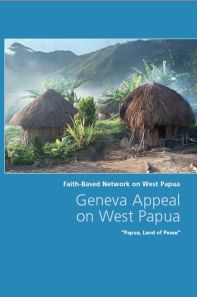 |
P34- Geneva Appeal on West Papua by Faith-Based Network on West Papua Multi-lingual call to respect human rights in
West Papua Faith-Based Network on West Papua, 2005. 47 pp. $8 |
 P7
- A Day in the Life of U.S.-Indonesia Trade
P7
- A Day in the Life of U.S.-Indonesia Trade
Real Trade profile by International Trade Information Service,
April 1995.
50 pp $7
|
Eye
on Aceh Pamphlets
all are bi-lingual English and Bahasa Indonesia $3 each |
|
    |
P35 Set of five Eye on Aceh pamphlets
P21
-
Aceh: Logging A Conflict Zone

P22
-
Fear in the Shadows: Militia
in Aceh P23
-
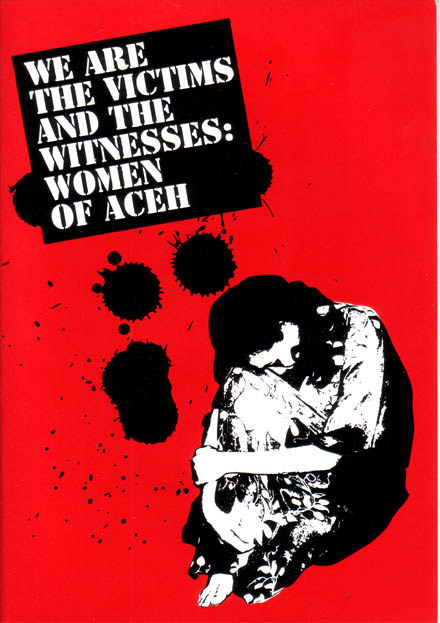
We Are the Victims and the
Witnesses: Women of Aceh P32 - Between Life and Death: Surviving Aceh's Tsunami 43 pp. 2005 $3
P33 - One Year Martial Law
in Aceh, May 2003-May 2004
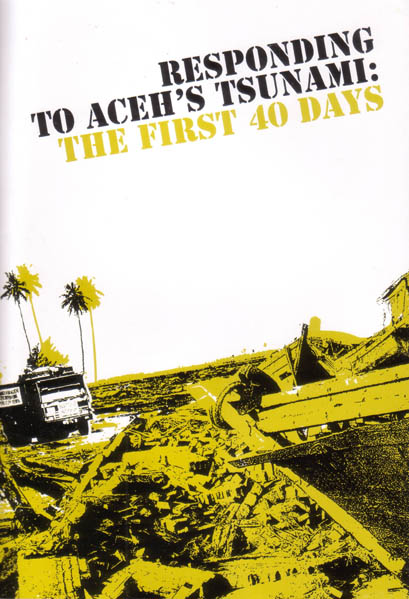
P20 - Responding to Aceh's Tsunami: The First 40 Days109 pp. 2005 $3
P32 -
A People's Agenda?
Post Tsunami Aid in Aceh
|
P25 - Indonesia at the Crossroads: U.S. Weapons and Military Training by Frida Berrigan. World Policy Institute report 13 pp. 2001 $3
P8 - U.S. Arms Transfers to Indonesia 1975-1997: Who's Influencing Whom? Detailed report on US arms sales by Bill Hartung & Jennifer Washburn, World Policy Inst., 1997. 17 pp. $4
|
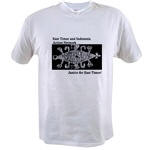
T-shirts, sweatshirts,
long-sleeved shirts, mugs, water bottles, kid clothes, bags,
notebooks, kids clothes and more.
Two designs!
|




|
|
||||||||

|
ETAN's other twitter accounts: |
||||||||
|
|||||||||
|
ETAN's Key Contact List Action alerts, media releases, key news and other resources on East Timor (Timor-Leste) and Indonesia selected by ETAN, focused on ETAN's program and priorities |
|||||||||
